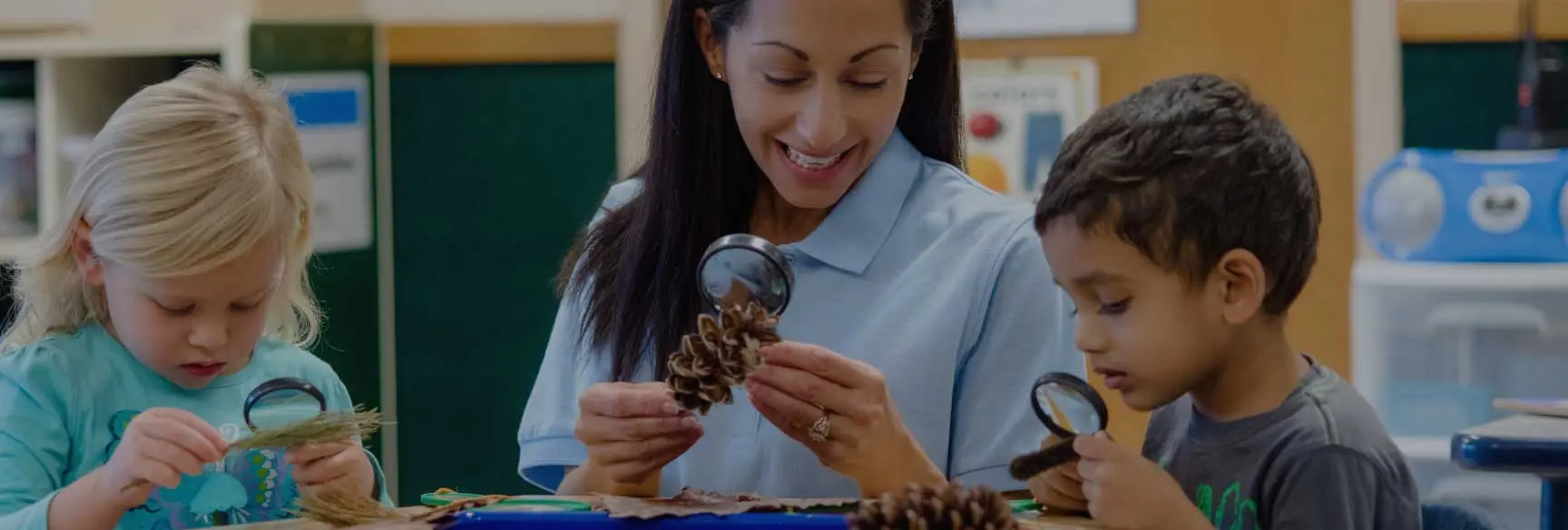

A few simple observation points can help families choose child care and school settings that truly support curiosity.
Family guide
Watch the questions
When you visit a program, listen for how adults respond to children's questions. A setting that turns questions into shared exploration, rather than quick answers, tends to keep curiosity alive longer.
Look at the walls
Displays of children's own work, at their eye level, signal that their thinking matters. It also shows whether the classroom values process and effort rather than only finished products.
Ask about the day
Request a sample daily routine and notice whether it includes active play, quiet time, books, art, and outdoor time. A balanced rhythm helps children thrive without feeling rushed.
A little curiosity leaves the door open for something new.